
Can Someone Change Wholeheartedly?
People often say, “people don’t change.” It’s a phrase tossed around in arguments, breakups, and even boardrooms. It sounds convincing, even wise, but is it true? Or are we just repeating it because it’s easier to believe that someone will always be who they’ve been?
Wholehearted change isn’t about a new haircut, a career shift, or picking up a hobby. It’s about rewiring how a person thinks, reacts, and chooses. It’s about changing behaviors and patterns that have been part of a person’s identity for years. And it’s not common. It doesn’t happen by accident. The process is deliberate, often uncomfortable, and requires consistent effort over time.
The Two Forces Behind Real Change
Psychologists point to two main drivers: pain and choice. Pain acts as the wake-up call. It forces a person to confront patterns they’ve ignored, mistakes they’ve made, and the cost of staying the same. Pain isn’t always dramatic—it can be a quiet realization that life isn’t going the way one expected, or repeated failure that forces reflection.
Choice is the other critical component. Choice is the deliberate, ongoing decision to act differently, to resist old habits, and to prioritize growth. It’s easy to try something once or twice; the challenge is doing it consistently, especially when the old behaviors feel easier or more comfortable. Without both pain and choice, change is superficial, often temporary. People may “try” to change, but without commitment, the effort fades, and patterns return.
Research supports this. A study published in The Journal of Pain suggests that pain perception can influence choice behavior, indicating that individuals may make different decisions when experiencing pain, potentially leading to changes in behavior . Another study in Psychological Science found that individuals who experienced pain were more likely to make choices that they believed would alleviate future discomfort, highlighting the role of pain in decision-making and behavior change.
Science Says It’s Possible
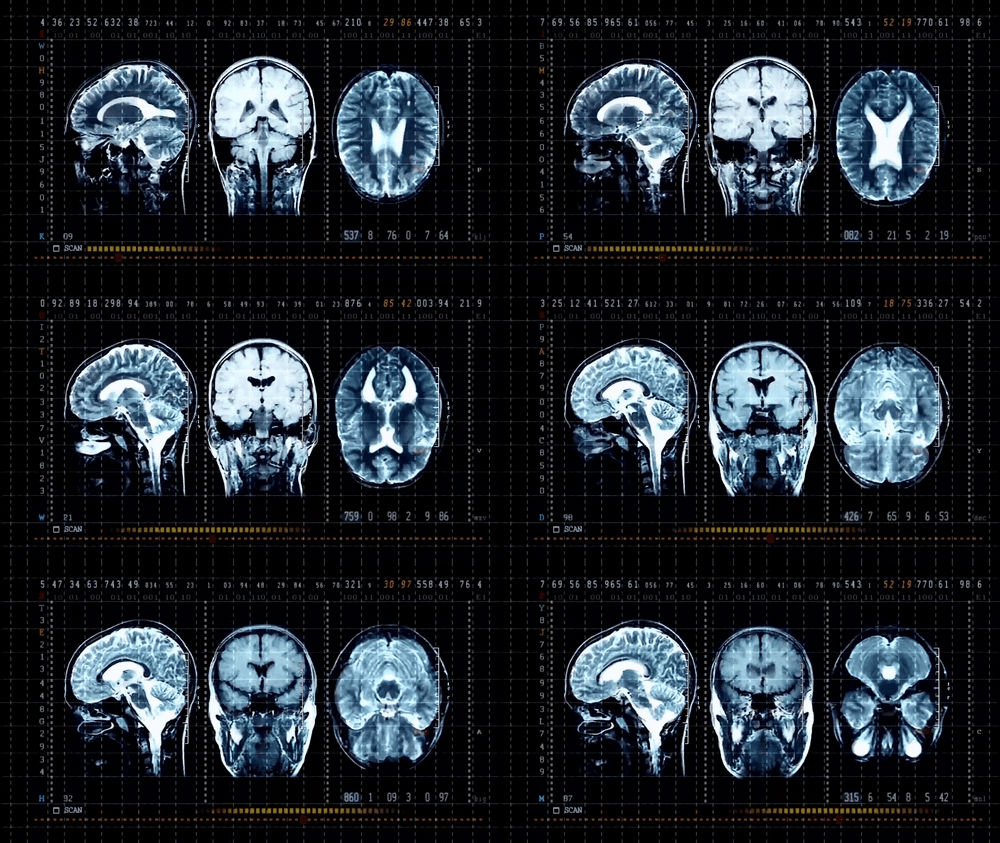
Here’s the part that surprises people: humans are designed to change. Neuroplasticity—the brain’s ability to rewire itself—means new thought patterns, habits, and behaviors are achievable. Repetition and consistency aren’t clichés; they’re the mechanisms that allow new behaviors to become natural. The brain literally builds new connections that make it easier to act differently in the future.
But even with science on our side, the brain doesn’t automatically favor change. Old habits are comfortable. They reduce mental effort and provide predictable outcomes. The longer a habit exists, the more entrenched it becomes. That’s why change requires intentionality, discipline, and strategies to overcome the mental resistance that naturally arises.
Studies have shown that neuroplasticity allows the brain to reorganize itself by forming new neural connections throughout life. For instance, research indicates that engaging in new learning experiences can lead to structural changes in the brain, enhancing cognitive functions. However, these changes require consistent effort and practice, as the brain tends to favor established neural pathways.
The External Battle
Even if the brain adapts, change doesn’t exist in a vacuum. People around you often resist it. Friends, family, and colleagues remember the “old you” and test whether the “new you” is real. They may dismiss your efforts, misinterpret your motives, or pressure you to revert to familiar patterns.
This external resistance is one of the biggest reasons people give up. It’s not just an internal struggle; it’s a social one. Successful change requires navigating both arenas—internal rewiring and external validation. When someone pushes through this dual challenge, they not only transform themselves but also shift how others perceive and interact with them.
Research supports this notion. A study published in Psychology Today discusses how fear of the unknown and a preference for the status quo contribute to resistance to change, emphasizing the psychological barriers individuals face when attempting to change. Additionally, a study in Management Decision highlights how organizational changes often face resistance due to factors like leadership inaction and employees’ fear of uncertainty.
The Grind of Transformation
Wholehearted change is not a sudden flip of personality. It’s a grind. It demands relentless honesty, consistency, and humility. Every slip-up is a lesson. Change is built on thousands of small decisions, repeated over weeks, months, or even years.
People who succeed at real transformation often describe it as ongoing, incremental work. They reset after mistakes, evaluate progress, and adjust methods as needed. There’s no shortcut, no single dramatic decision, no magic moment. Change is the accumulation of effort over time, applied strategically and consistently.
Studies have shown that individuals who engage in consistent, deliberate practice can experience significant improvements in their abilities and behaviors. For example, research indicates that individuals who practice mindfulness techniques regularly can experience changes in brain structure and function, leading to improved emotional regulation and behavior.
Why Change Is Rare
The rarity of wholehearted change is part of what makes it remarkable. Most people stop at intention. They hope, plan, and try, but they rarely sustain the discipline needed for deep transformation. Change requires energy, focus, patience, and a willingness to confront discomfort repeatedly. Few are willing to maintain that level of commitment.
Those who do succeed prove that transformation is not only possible, but tangible. It demonstrates the human capacity to redefine identity, rethink behavior, and rebuild patterns. Change is not only mental; it affects how a person interacts with the world, how they make decisions, and even how they are perceived by others.
The Real Question
So, can someone change wholeheartedly? The answer is yes—but it comes with limits and conditions. Research in psychology and neuroscience shows that lasting change requires sustained effort over time. Neuroplasticity—the brain’s ability to rewire itself—demonstrates that new habits, thought patterns, and behaviors can form even in adulthood. But these changes don’t happen automatically; they require deliberate, consistent action.
Wholehearted transformation is about persistence and strategy. Studies show that individuals who succeed in changing behavior often rely on structured routines, accountability systems, and continuous reflection. The process involves confronting entrenched habits, navigating social pressures, and choosing repeatedly to act differently than one’s default instincts.
The real question isn’t whether change is possible—it’s whether someone is willing to endure the difficulty it demands. Change forces a confrontation with self-perception, identity, and long-held patterns. It’s not just an internal process; it reshapes relationships, decisions, and life trajectories. Those who achieve it prove a fundamental truth: human behavior is adaptable, but adaptation requires intention, effort, and the courage to keep moving forward even when the results are not immediate.