
The Invisible Heart of Asia
“You’re from what-stan?”
“So what, you’re Russian?”
“I’m not into geography.”
You’ve probably heard of Kazakhstan because of Borat, or Turkmenistan through TikTok videos calling it “this generation’s North Korea.” But have you ever stopped to ask what these countries are actually like? Who their people are? What lies beyond the stereotypes?
I grew up with almost no representation of my country or my people. As a child, I found myself relating to Disney’s Mulan simply because she was “close enough.” That’s how invisible Central Asians are in global media. We settle for less.

Representation matters because recognition creates awareness, especially for communities that are rarely seen. But when the only recognition you receive is negative, it just becomes erasure in a “nicer way”.
When Central Asia is mentioned, it is almost never because someone was curious about us. It is because we make for an easy stereotype.
We’re criminals.
We’re prostitutes.
We’re religious extremists.
We’re misogynists.
Or we’re simply Russians.
That last one hurts in a different way.
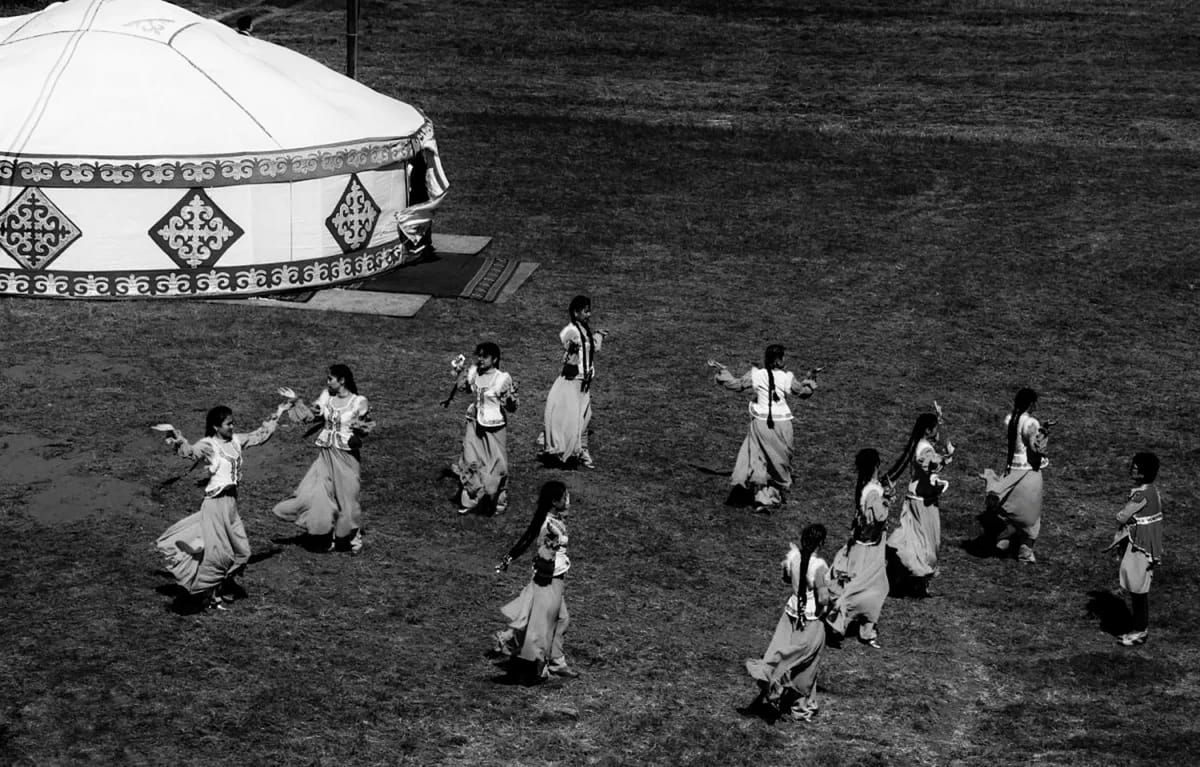
Because after decades of your grandparents trying to preserve your traditions…
After your parents teaching you words in a language they were once discouraged from speaking…
After spending your life trying not to lose the little pieces of your culture that history nearly took from you…
Someone looks at you and says,
“So… you’re Russian?”
It’s difficult to name a globally recognized film where a Central Asian family simply exists without being defined by war, dictatorship, poverty, or crime.

Take Anora. The film follows a Brooklyn stripper who marries the son of a wealthy Russian oligarch, and the protagonist is revealed to have Uzbek roots. Some might see that as progress: “At least Uzbekistan was mentioned.” But many Central Asians don’t experience it that way. Uzbekistan has grappled with difficult social issues, including women being pushed into prostitution in the years following the collapse of the Soviet Union. When one of the few internationally visible Uzbek characters is connected to that reality without exploring the culture, history, or humanity of the people she supposedly represents, it can feel as though the stereotype is all that survives.
Or take Borat. A mockumentary built on exaggeration and satire, it became the primary point of reference for Kazakhstan in the minds of millions of people—a movie that wasn’t even filmed in Kazakhstan but in Romania. Ask many Kazakhs what happens when they tell someone where they’re from, and they’ve heard the same response countless times: “Oh, Kazakhstan? Like Borat?”
Imagine your country being known purely for a joke.
Imagine if the world knew your country almost exclusively through a film built on caricature. Imagine introducing yourself and immediately being met with jokes, misconceptions, or stereotypes instead of curiosity.
Curiosity.

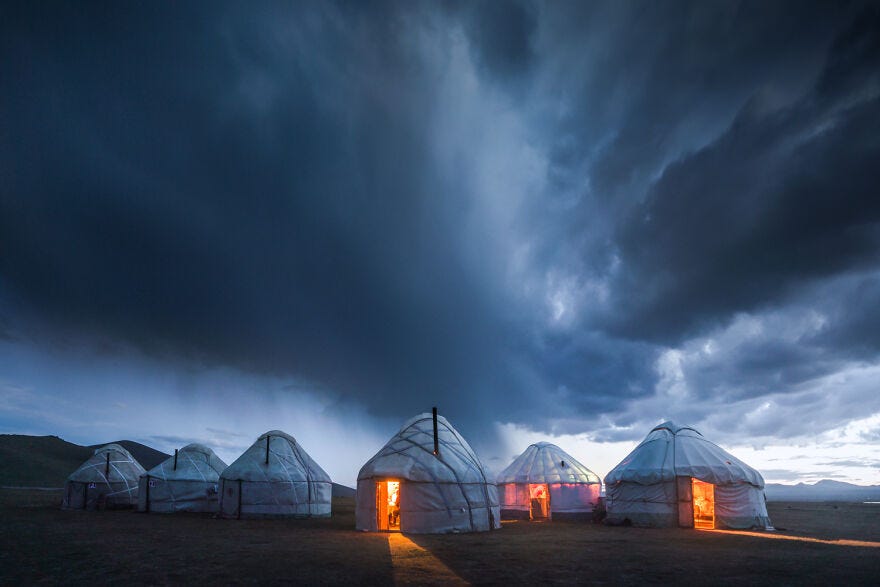
Because if you were curious, you would discover that Central Asia isn’t empty space between Europe and East Asia.
It is home.
Home to the endless steppes beneath open skies.
To doctors and scientists.
To artists.
To millions of ordinary people living ordinary lives.
If you can spend hundreds of millions bringing medieval Europe, Viking sagas, and ancient Rome to life…
Surely you can spare enough curiosity to understand a part of the world that exists beyond the stereotypes.
Imagine what could happen if they approached Central Asia not as a punchline or a convenient backdrop, but with genuine curiosity. Imagine a child from these steppes watching a film and, for the first time, recognizing not just a name, but themselves.
Recognizing a story of themselves—
of their people.
Everyone deserves that feeling.
The feeling of home.
Of recognition.
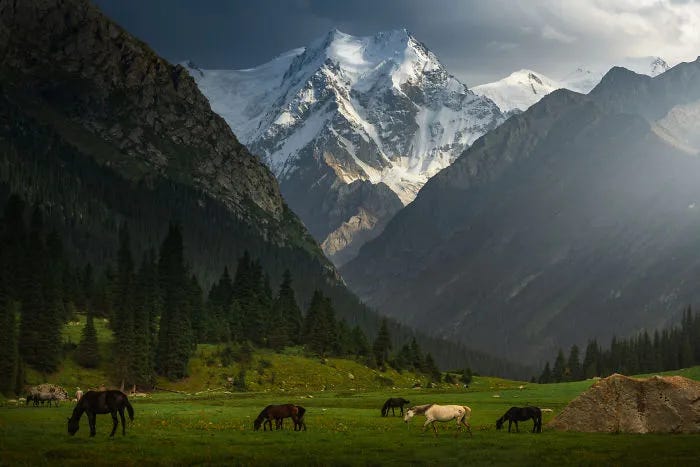
Central Asia is more than a punchline. We are more than the legacy of the Soviet Union. We are more than criminals, prostitutes, or nameless “Russians.”
We are nations with our own languages, histories, literature, music, traditions, and identities. We deserve the same humanity that filmmakers so effortlessly extend to other parts of the world.
We are not asking to be portrayed as perfect.
We are asking to be portrayed as people.